
Roma Pass
The Roma Pass is the official card of the City of Rome and the cheapest product in this comparison. It combines two things: unlimited travel by bus, metro and tram for its entire validity, and one or two free admissions for which you pay nothing further. After that, you visit further museums and sites at the reduced rate. Since the switch to the Roma Pass app, the pass is entirely digital on your smartphone, and there is no longer any pickup in Rome.
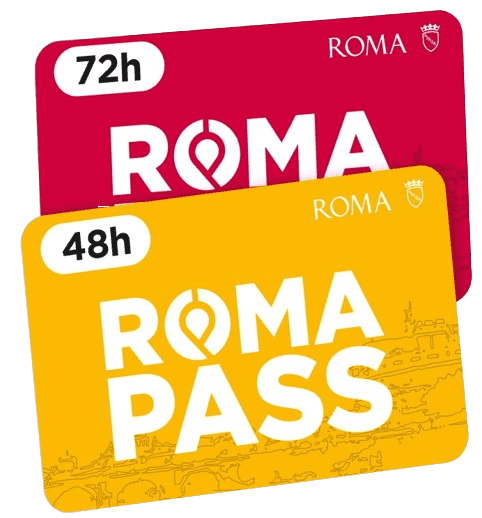

What is included
- Public transport for the entire validity period Metro, bus, tram and the city sections of the regional trains, as often as you like. This is the largest component of the pass and the reason why it is worth it above all for travellers staying outside the centre.
- One or two attractions at no extra cost With the 48-hour pass the first visit is free, with the 72-hour pass the first two. The order is what matters: it is the first visits that are free, not the most expensive ones. So start with the Colosseum or the Galleria Borghese.
- Reduced entry to many further museums and sites After the free visits, you pay less at municipal museums and sites. The reduction does not replace free entry, but it adds up noticeably over several visits.
- Colosseum, Castel Sant'Angelo, Circus Maximus and the municipal museums The selection mainly covers ancient sites and the city's museums. The Vatican Museums are not included, because the Vatican is a separate state.
- Entirely digital in the Roma Pass app After purchase, the pass is on your smartphone. There is no longer any pickup, but you should keep your phone charged while you are out and about.
The small print
- Validity
- 48 or 72 hours from first use
- Scope
- 1 or 2 attractions free, then a discount
- Public transport
- included
- Pickup
- digital in the Roma Pass app
- Cancellation
- non-refundable
Reservations
You take care of the reservations yourself, via the Roma Pass app or the provider's website. A time slot is mandatory for the Colosseum and the Galleria Borghese; the provider recommends securing it around ten days in advance, and more like twenty in high season.
How the Roma Pass works
The Roma Pass is the official card of the City of Rome and the cheapest product in this comparison. It combines two services: during its validity you travel free on public transport, and you receive one or two free admissions. A discount then applies to all further visits.
The difference between the two durations seems smaller than it is in practice. With the 48-hour pass, one attraction is free; with the 72-hour pass, it is two. The order of your visits matters here: the free ones are the first attraction, or the first two, that you visit, not the most expensive ones. So if you go to the Colosseum first and then to Castel Sant'Angelo, you use the free admissions for the two expensive sites. If, on the other hand, you start with a small museum, you use up a free admission on an inexpensive visit and later pay the reduced price at the expensive attraction.
The Roma Pass is now an entirely digital card. After purchase, you download the Roma Pass app to your smartphone and activate the pass there; you no longer need to go to a counter to do this. The collection at the airports and tourist information points that used to be common no longer applies. Make sure your phone stays charged while you are out and about, because the pass exists only on the device and cannot be shown without it.
The pass is sold both on the official website romapass.it and through booking portals. Through a portal, you pay a service fee on top of the official price. In return, you book in your own language, with the payment methods you are used to, and with someone to contact if something does not go as planned with your booking.
What the pass includes
Attractions and museums
The pass is valid for, among others, the Colosseum with the Roman Forum and Palatine Hill, Castel Sant'Angelo, the Capitoline Museums, the Circus Maximus, the Baths of Caracalla, the Galleria Borghese, Palazzo Valentini and other municipal sites. The first one or two visits are free; for all further ones you receive reduced tickets. How large the discount is at each site is shown in the official list of attractions.
There are also discounts on tourist services. These include sightseeing tours, bike and Segway tours, and left-luggage storage.
Public transport
You can use ATAC's metro, buses, trams and some suburban trains without limit for 48 or 72 hours respectively. The validity period starts with the first use, not with the purchase. As the pass is in the app, have your smartphone ready if your ticket is checked; make sure, therefore, that it stays charged while you are out and about.
What is not included
The Roma Pass is primarily a pass for historic sites and museums; it covers tourist services only to a small extent. It does not include the Vatican Museums with the Sistine Chapel, for which the Rome Omnia Card exists as a combination. Also not included are the guided tour of St Peter's Basilica, guided city tours, and the airport train and bus. Some operators give a small discount on the hop-on hop-off bus.
Reservations: what you have to organise yourself
A reservation is compulsory at two sites: the Colosseum with the Roman Forum and Palatine Hill, and the Galleria Borghese. It is best to check availability for your preferred date before you buy. If you can no longer get a slot at the Colosseum during your stay, the most important single service of the pass is lost, and the calculation works out considerably worse for you.
A reservation is also recommended for Palazzo Valentini/Domus Romane, the Galleria Spada, the Capitoline Museums, a few other municipal museums and, if you are under 26, Castel Sant'Angelo.
You take care of these reservations yourself. Each attraction has its own procedure and its own website, and a small reservation fee is often charged. Allow some time for this before your trip.
Is the pass worth it for you?
The price depends on the duration you choose; you will find the current starting price at the top of this page. GetYourGuide has no age-based pricing. The pass is therefore more worthwhile for travellers aged 26 and over than for younger ones, because younger EU citizens pay little or no admission at many sites anyway and so save correspondingly less with the pass.
For orientation, here is a typical three-day programme and what it adds up to when bought individually at normal prices:
Without a pass, normal prices
- Public transport ticket for 72 hours: around €22
- Colosseum with Roman Forum: around €18
- Castel Sant'Angelo: around €16
- Galleria Borghese: around €17
- Baths of Caracalla: around €8
- One day on the hop-on hop-off bus: around €21
With the pass, the first two of these visits are free, the Galleria Borghese and the Baths of Caracalla cost only a fraction, the bus is slightly reduced, and public transport costs nothing at all. On balance, this leaves a moderate saving. It does, however, assume that you actually use public transport. If you explore Rome mainly on foot, the largest single item of the pass falls away, and the saving shrinks accordingly.
Purchase and activation
There is one point you should know before you buy: the Roma Pass cannot be cancelled. This applies to the official website as well as to the booking portals. Only buy it once your travel dates are fixed.
The process is the same in both cases: after purchase you receive a confirmation, download the Roma Pass app and add the pass there. The validity period only starts with the first use, that is, with your first journey or your first museum visit, and not with the purchase. You can therefore book the pass in advance without any rush.
What speaks against the Roma Pass
- The Vatican is missing. The Vatican Museums and the Sistine Chapel are not included, and you only get a small discount on guided city tours and sightseeing tours.
- Only one or two free admissions. All further visits are reduced, not free, and the order of your visits determines which attractions you see free of charge.
- You make the reservations yourself. For the popular sites, you have to arrange a slot before your trip, in each case on the attraction's own website.
- No cancellation. Once bought, the pass cannot be returned, regardless of where you book it.
- Not well suited to families. Children and young people pay nothing at many sites anyway. At most, it therefore makes sense for the parents to buy the pass; the children then sometimes need their own timed tickets.
When the pass is worth buying
The Roma Pass is the cheapest way to combine public transport and admissions. It is worth it if you travel a lot by bus and metro and plan two or three visits. If, on the other hand, you mainly walk through the centre, you give away the largest component of the pass, and if you want to see many attractions, you will soon reach the limit of one or two free admissions.