
Rome City Pass
The Rome City Pass is the larger of the two Turbopass products and has the widest selection in this comparison. Within the days you have booked, you use as many services as you can manage, from the Colosseum, the Vatican Museums and St Peter's Basilica to the hop-on hop-off bus and a guided city walk. The time slots for the two major attractions are included when you buy.
What is included
- Colosseum with Roman Forum and Palatine Hill The complete site with one ticket and a reserved time slot that Turbopass books for you. Allow half a day for it, because the Forum alone is larger than it looks from outside.
- Vatican Museums and Sistine Chapel Kilometres of galleries, with the Sistine Chapel at the end. This time slot is also reserved when you buy, which takes care of the part of trip preparation that experience shows is the most stressful.
- Castel Sant'Angelo and other attractions Castel Sant'Angelo was an imperial tomb, a fortress and a refuge for the popes. From the roof terrace you look across the Tiber to St Peter's Basilica. On top of this come further museums and sites in the city that you can visit at no extra cost during the validity period.
- St Peter's Basilica The largest church in the world is included in the City Pass, but not in the smaller Essentials Pass. This is one of the differences most likely to tip the balance when comparing the two Turbopass passes.
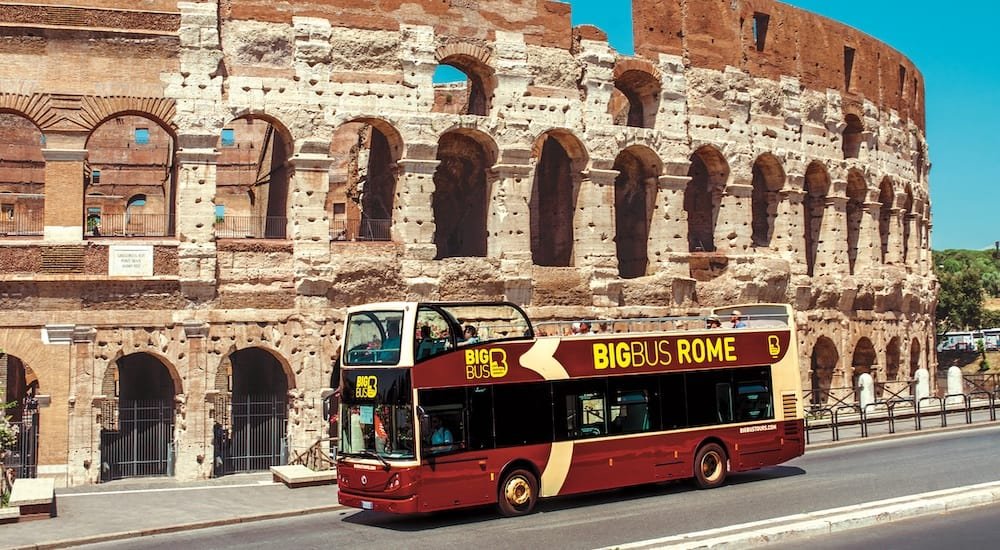
- Hop-on hop-off bus and Tiber boat tour The bus route connects the major sights, and you get on and off wherever you like. There is also a hop-on hop-off boat tour on the Tiber. For the long distances between the Vatican, the Colosseum and Trastevere, both are often more pleasant than the crowded metro.
- Guided city walk and bike tour A guided walk to help you settle in and a bike tour for the days after. Both are included in the price and do not need to be booked separately.
- Optional: public transport ticket and airport bus Both can be added when you buy. You collect the public transport ticket in Rome, because Roman tickets of this kind only exist on paper.
The small print
- Validity
- 1 to 7 calendar days
- Scope
- more than 26 services, as many as you can manage
- Public transport
- optional add-on
- Pickup
- pass digital, transport ticket on site
- Cancellation
- €50 fee, up to 1 day before
Reservations
Turbopass reserves the Colosseum and the Vatican Museums when you book. For Castel Sant'Angelo you reserve your time slot yourself afterwards via a booking link; this is recommended but not required.
How the Rome City Pass works
You choose a duration of between one and seven consecutive calendar days and, within that period, use as many of the included services as you can fit in. The more of the programme you actually take up, the lower the price works out for each individual service.
After purchase, you receive the pass by email. You only need to collect something if you have added the public transport ticket. All other services are stored as digital documents on your phone and are shown at the attraction in question.
The pass does not include priority entry. For the attractions in high demand, however, you receive tickets with a fixed time slot. In Rome, a fixed appointment of this kind is the decisive point in practice, because demand at these sites is high, and whether you can still get a place on the day you want determines how you plan your day.
What the pass includes
Top attractions
The major sights include the Colosseum with the Roman Forum and Palatine Hill, the Vatican Museums with the Sistine Chapel, St Peter's Basilica, Castel Sant'Angelo, the Pantheon and the underground of Piazza Navona. In total, Turbopass lists more than 26 included services; the following sections go through the most important of them.
For the Colosseum and the Vatican Museums, you make your reservation when you book. You state your preferred date and an approximate time slot, Turbopass takes care of the reservation and sends you the admission tickets by email. If your appointment is not available, you can deselect the attraction in question; the pass then becomes correspondingly cheaper. For Castel Sant'Angelo, you reserve yourself after purchase via a booking link. This is recommended but not compulsory.
Museums and historic sites
In addition, there are sites that are less well known: the Museo delle Cere, the GAMM Video Game Museum, the Case Romane del Celio, Palazzo Merulana, the Vicus Caprarius at the Trevi Fountain, Palazzo Barberini with the Galleria Corsini, and the archaeological park of Ostia Antica. At the Museo Leonardo da Vinci Experience, you receive a discount rather than free entry. No reservation is needed at these sites; you simply show the pass and receive your ticket.
Tours and extras
Also included are a hop-on hop-off sightseeing bus tour, a hop-on hop-off boat tour on the Tiber and an English-language guided city tour, which takes place daily, lasts around 90 minutes and can be joined without registering. On top of that come a catacombs tour including transfer, a three-hour bike tour, the multimedia video "Ancient Rome" at Touristation and left-luggage storage at the main station.
Public transport and airport
The ATAC ticket for the metro, buses, trams and some suburban trains is an optional add-on; it is valid for as long as the pass. There is no digital version of this ticket, so you collect it in Rome. There are three collection points, including one at the main station. You can also add the airport bus to and from Fiumicino or Ciampino. When you do, make sure you select the correct airport.
What is not included
The pass does not include the Galleria Borghese, a guided tour of St Peter's Basilica, the Capitoline Museums or the Leonardo Express from the airport. If one of these is on your list, buy the ticket for it separately.
What the pass costs
The price depends on the duration: the longer the pass is valid, the less it costs per day. There are cheaper passes for children aged 6 to 9 and for young people aged 10 to 17; infants up to 5 pay nothing.
| Calendar days | Adults | Children & teens from |
|---|---|---|
| 1 day | €109.90 | €44.90 |
| 2 days | €129.90 | €54.90 |
| 3 days | €139.90 | €64.90 |
| 4 days | €159.90 | €69.90 |
| 5 days | €169.90 | €79.90 |
| 7 days | €179.90 | €89.90 |
Prices include the Colosseum and the Vatican Museums, as Turbopass lists them. The public transport ticket and the airport bus are added if you need them.
Whether the pass pays off
More telling than the price of the pass is the amount you would pay without it. For a typical three-day programme, the picture looks like this:
Bought individually, normal prices
- Vatican Museums & Sistine Chapel — around €25
- Colosseum with Roman Forum — around €18
- Castel Sant'Angelo — around €16
- Pantheon — around €5
- Catacombs tour with transfer — around €59
- Guided bike tour — around €45
- Hop-on hop-off sightseeing bus tour — around €36
- Multimedia video "Ancient Rome" — around €15
Together around €219. You can compare this amount with the pass price in the table above. The normal prices are the providers' reference prices as of September 2026.
Two points do not appear in this calculation but speak in favour of the pass. First, tickets for the Colosseum and the Vatican Museums are often no longer available at these prices at all, because the official allocations sell out early; what remains are more expensive ways of booking. Second, the calculation shifts further in the pass's favour if you also visit a museum during those three days or use the left-luggage storage.
The reverse applies just as much: if you have no interest in several items on this list, the comparison comes out considerably lower, and the pass does not pay for itself on your trip.
Purchase and documents
The pass is sold by Turbopass. You can pay by credit or debit card, by instant bank transfer (Sofort), with PayPal or by bank transfer in advance. The confirmation email contains the digital pass for you to print or save. The tickets for the Colosseum and the Vatican Museums follow a little later, but in good time before you leave. If you have booked the public transport ticket, the collection voucher is also in this email.
What speaks against the pass
No product suits every trip. You should know the following five points before you decide to buy:
- The pass is not a single ticket. It consists of several files and individual tickets. If you do not look through and sort the documents once after purchase, you may not have the right document to hand at the crucial moment in Rome.
- Under 26, it pays off less often. EU citizens aged between 18 and 25 pay considerably reduced admission at several attractions and museums. The advantage of the pass is correspondingly smaller in this age group.
- The saving remains moderate. It is there, but it stays within modest limits. How large it turns out to be depends above all on how many of the included services you actually use.
- The cancellation fee is high. You can cancel up to one day before the first day of validity, but a fee of €50 per pass applies.
- You have to collect the public transport ticket. This applies to all Rome passes with a travel ticket, but here it is the only service you have to pick up in person in Rome.
When the pass is worth buying
The Rome City Pass is worth it if you want to see a lot in a few days and have little desire to deal with tickets and appointments. It has the largest selection in this comparison, and the more of it you use, the more clearly it pays off. If, on the other hand, you travel at a leisurely pace and see one sight per day, you are paying here for services that go unused.